
The wholesale price-based inflation eased to a 29-month low of 1.34 per cent in March on easing prices of manufactured products and fuel items, even though food articles turned expensive.

Hybrids have helped Maruti acquire leadership in SUVs, a segment that was never its forte. Toyota has also risen with the hybrid tide to clock its highest-ever annual sales in 2023.

India's inflation trajectory in the coming months will be influenced more by the geo-political situation due to the war in Europe and its impact on supply chains and commodity prices. However, the country is better placed than most to "weather the storm" and achieve growth of close to 8 per cent in the current fiscal year, the finance ministry said in its latest monthly economic report on Thursday. "Through the channel of imports, elevated global crude and edible oil prices now have a significant impact on India's inflation outlook. "Government measures to keep the prices of these commodities in check, along with the recent hike in policy rates by the RBI, are expected to temper inflationary pressures in the economy," the monthly economic report for April, drafted by the finance ministry's economic division, said.

His comments poured cold water on hopes that the central bank may have a rethink on rates after the wholesale price index, the main inflation gauge, rose a lower-than-expected annual 7.25 per cent in June, its slowest rise since January, helped by moderation in fuel prices.
Domestic fares on all sectors became costlier by Rs 200 from Friday with the hike in fuel surcharge, imposed by major airlines due to increase in jet fuel prices.

Do not underestimate the ingenuity of the Deep State in America to have its way. Keeping the guard down will be a catastrophic mistake on the part of the Delhi establishment. We could get hit when least expected. That's what happened in Bangladesh and Syria, warns Ambassador M K Bhadrakumar.
ITC has been one of the best performing large-cap stock at the bourses thus far in calendar year 2022 (CY22), rallying nearly 52 per cent during this period and outperforming the sector benchmark - the S&P BSE FMCG index - by a wide margin that moved up around 17 per cent during this period. However, the counter has lost over 5 per cent from its recent high of Rs 346.25 hit on September 23, 2022 and has underperformed the S&P BSE Sensex, which has lost nearly 2 per cent since then. So, is the rally in the stock coming to an end, and is this a good time to book profit?

Wholesale Price Index-based inflation declined to 6.62 per cent in January, however, retail inflation remained in double digits at 10.79 per cent during the month.

Modi made a strong case for a partnership between the producers and consumers in the oil market as it exists in other markets.

The monthly electricity bills of the majority of domestic consumers in Delhi -- who use more than 200 units and up to 600 units -- will be hiked by up to Rs 265 due to an increase in the power purchase adjustment cost (PPAC) levied by discoms in the city, officials said on Monday.

Airlines will report losses in FY16 but 35% less Y-o-Y

The opposition party vowed to hit the streets against the "Modi-made inflation" and run a people's movement over price rise.
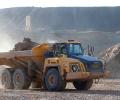
India needs to recognise and address challenges posed by its dependence on China for critical minerals and examine the implications of phasing down coal on bank balance sheets as it accelerates its green transition, the government's Economic Survey 2023-24 tabled in Parliament on Monday said. As part of its national plan to contribute to meeting the global goal of limiting the average temperature rise to 1.5 degrees Celsius, India has committed to reducing emissions by 45 per cent below 2005 levels by 2030, achieving 50 per cent cumulative electric installed capacity from non-fossil fuel-based energy resources, and creating a carbon sink of 2.5 to 3 gigatons of CO2 equivalent through additional forest and tree cover.
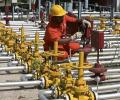
The government on Thursday hiked by 62 per cent the price of natural gas that is used to produce electricity, make fertilisers and turned into CNG to use as fuel in automobiles and cooking gas for household kitchens. This is the first increase in rates since April 2019 and comes on back of firming benchmark international prices but does not reflect the spurt in spot or current price of liquefied natural gas (LNG) witnessed during the last couple of weeks. The oil ministry's Petroleum Planning and Analysis Cell (PPAC) said the rates paid for gas produced from fields given to state-owned Oil and Natural Gas Corporation (ONGC) and Oil India Ltd (OIL) will be $2.90 per million British thermal unit for the six-month period beginning April 1.

Buying a car, particularly a diesel-powered one, is set to pinch the customers' pockets even more from the next financial year, as the second phase of Bharat Stage VI (BSVI) emission norms kicks in. The rules require cars to be compliant with real driving emission (RDE) norms, which measure pollutants emitted by cars while they are being driven on the road, unlike in a laboratory test. The norms may increase the cost of producing diesel vehicles by nearly Rs 75,000 to Rs 80,000, and petrol-powered ones by Rs 25,000 to Rs 30,000, analysts said.

The spurt in rates, caused by the rally in international oil prices, has led to the oil ministry asking the finance ministry for a cut in excise duty in the Union Budget 2018-19, to be presented in Parliament next week.
.jpg)
Declining prices of food items like vegetables pulled down retail inflation to 5.59 per cent in July, bringing it back within the RBI's comfort zone after two months, official data showed on Thursday. The retail inflation based on the Consumer Price Index (CPI) had remained above 6 per cent during May and June. The government has mandated the RBI to maintain retail inflation at 4 per cent, with a margin of 2 per cent on either side. The CPI based inflation stood at 6.26 per cent in June 2021 and 6.73 per cent in July 2020.
The prices of petrol and diesel have been recently hiked and more can be expected in coming months. A few tips on how to make your litre of petrol go the distance.

The Congress on Monday stepped up its attack on the BJP-led Centre over the issue of price rise with Rahul Gandhi saying the biggest problems facing the country were unemployment, inflation and growing hatred.

Milk and its products too were less expensive with inflation print of 4.21 per cent, cereals and products at 2.10 per cent, meat & fish at 3.31 per cent while for eggs the prices grew at a slower pace of 8.51 per cent.

He said the border situation remained a big problem as the military has been holding its ground for two winters.

Size matters on the road. Small is not dominating India's car market any more. The share of cars priced up to Rs 5 lakh in the passenger vehicle market has fallen to 10.5 per cent in the first 11 months of 2021-22, compared with 26 per cent in 2018-19 (FY19), the lowest in four years, according to data from industry sources. Even the share of those in the price range between Rs 5 lakh and Rs 7.5 lakh has dropped to 32.4 per cent in the same period, from 34.9 per cent.

The BJP can't be sure if it should celebrate that the old rival is fading or worry that new ones are rising. Because the last thing the BJP wants to see is alternatives rising, if only to the Congress, observes Shekhar Gupta.
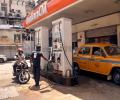
Petrol and diesel prices on Tuesday were hiked for the sixth time this month, propelling prices to cross the Rs 100-a-litre-mark in places from Nanded in Maharashtra to Rewa in Madhya Pradesh to Jaisalmer in Rajasthan. Petrol price was hiked by 27 paise a litre and diesel by 30 paise per litre, according to a price notification by state-owned fuel retailers. The increase took petrol and diesel prices to their highest-ever level across the country. In Delhi, petrol now comes for Rs 91.80 per litre and diesel is priced at Rs 82.36.

RBI in its policy review last month kept interest rates unchanged and said it sees an upside risk to inflation.
A one rupee per litre cut in taxes would result in revenues being hit by Rs 30,000 crore on an annualised basis.

Sources aware of the development said as part of the project, the airline had signed an agreement with Reliance Industries Ltd, which would extend quality control services at its coastal terminals for ATF imported by the airline.

The United Nations on Wednesday pared down India's growth forecast by 20 basis points to 5.8 per cent for 2023 calendar year, citing higher interest rates and risks of recession in the developed world weighing on investment and exports. "Economic growth in India is projected to moderate in 2023, with higher interest rates weighing on investment and slower global growth weakening exports," it said in its latest World Economic Situation and Prospects report. The report has projected global trade to contract 0.4 per cent and the world economy to grow at 1.9 per cent in 2023.
Inflation further rises to 8.75 per cent for the week ended May 31, 2008, against 8.24 per cent in the previous week.

For now, the upside appears to offset damage done to exports by weaker global demand.
Institute of Economic Growth warned on Wednesday that the rise in oil prices due to fears of war in Iraq might "hamper" the government's plan for acquiring and maintaining strategic oil reserves for 45 days and the import bill was bound to go up
After Rajasthan, petrol price on Thursday crossed the Rs 100 per litre mark in Madhya Pradesh after fuel rates were increased for the tenth day in a row. Petrol price was hiked by 34 paise per litre and diesel by 32 paise, according to a price notification of state-owned fuel retailers. While branded or additive-laced petrol, which attracts higher taxes, had crossed the Rs 100-mark in some places in states like Maharashtra, Madhya Pradesh and Rajasthan, regular petrol crossed the physiological mark in Sriganganagar town of Rajasthan on Wednesday, and on Thursday it went past that mark in Madhya Pradesh. In Anuppur of Madhya Pradesh, petrol is priced at Rs 100.25 per litre and diesel at Rs 90.35. Fuel prices differ from state to state depending on the incidence of local taxes such as VAT and freight charges.

The Sensex came under fag-end selling pressure to close in the red for the sixth straight session on Friday as risk-off sentiment prevailed amid unabated selling by foreign institutional investors and concerns over inflation. The 30-share BSE benchmark pared all intra-day gains and declined 136.69 points or 0.26 per cent to end at 52,793.62. During the day, it had rallied 855.4 points or 1.61 per cent to 53,785.71. On similar lines, the broader NSE Nifty dipped 25.85 points or 0.16 per cent to settle at 15,782.15.

Despite admitting to price pressures both from food items and input prices, RBI Governor Shaktikanta Das on Wednesday hoped that a normal Southwest monsoon will have a "soothing impact" on inflation pressures and ruled out any wide variations in medium-term inflation forecast from what was given in April. In an unscheduled address earlier in the day amidst the raging pandemic, Das said the overall outlook for the economy is highly uncertain and is clouded with downside risks. He offered a slew of relief and liquidity measures to individuals and small businesses apart from a Rs 50,000 crore special liquidity window to the healthcare sector.
The latest round of petrol and diesel price increase, on Thursday, met with opposition from many corners.
There is no respite for the common man from rising prices. Despite the government's efforts to control runaway price-rise, inflation rose to 7.83 per cent for the week ended May 3, as against 7.61 per cent in the week before that.

Dear Finance Minister, We don't expect magic, just a little understanding and some tax relief that feels like a real reward, not a bare minimum. A little extra fuel in our wallets could go a long way, pleads Vatsal Ramaiya

Reliance Industries has made drastic changes in gas supply contracts that will jack up its KG-D6 gas price by 10 per cent over and above the new rate of $8.3 coming into effect from next month.
The commodity price shock absorber is no longer working as it did in the past

Average monthly GST collection rose from Rs 90,000 crore during the first year of its implementation -- 2017-2018 -- to Rs 1.68 trillion during 2023-2024, representing an 87 per cent rise.
